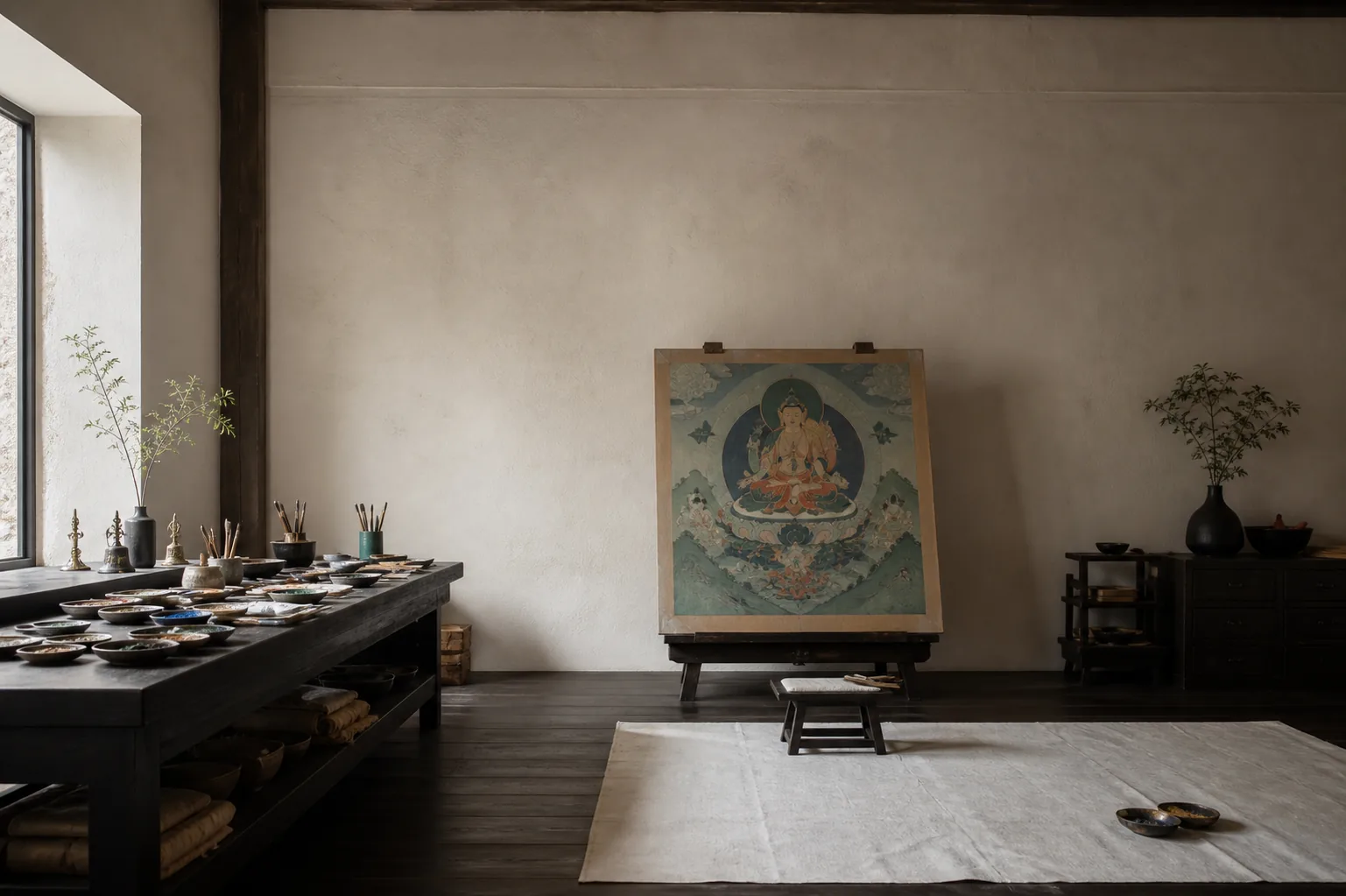
From early memories preserved in family oral history to today’s records of materials, dimensions, and the movement of each work, Zangjing Art places pattern books, handwork, and contemporary collecting practice on one timeline.
AN ORAL HISTORY
Time is not something outside the work, It lives between every lesson, every layer of colour, and every interval of waiting.
The dates below come from the brand’s oral chronology, while historical documentation remains under review. They describe how the family understands its own craft lineage; they are not a historical authentication by an independent institution and are not used to manufacture an unverified legend.
spiritual source
Early memories of images, beliefs and craftsmanship
Family oral accounts point to 1558 as the spiritual origin of this tradition. It is not the founding date of the company in the modern sense, but an early memory of respect, order and a way of seeing images.
family painting
Our ancestors began to make thangkas continuously
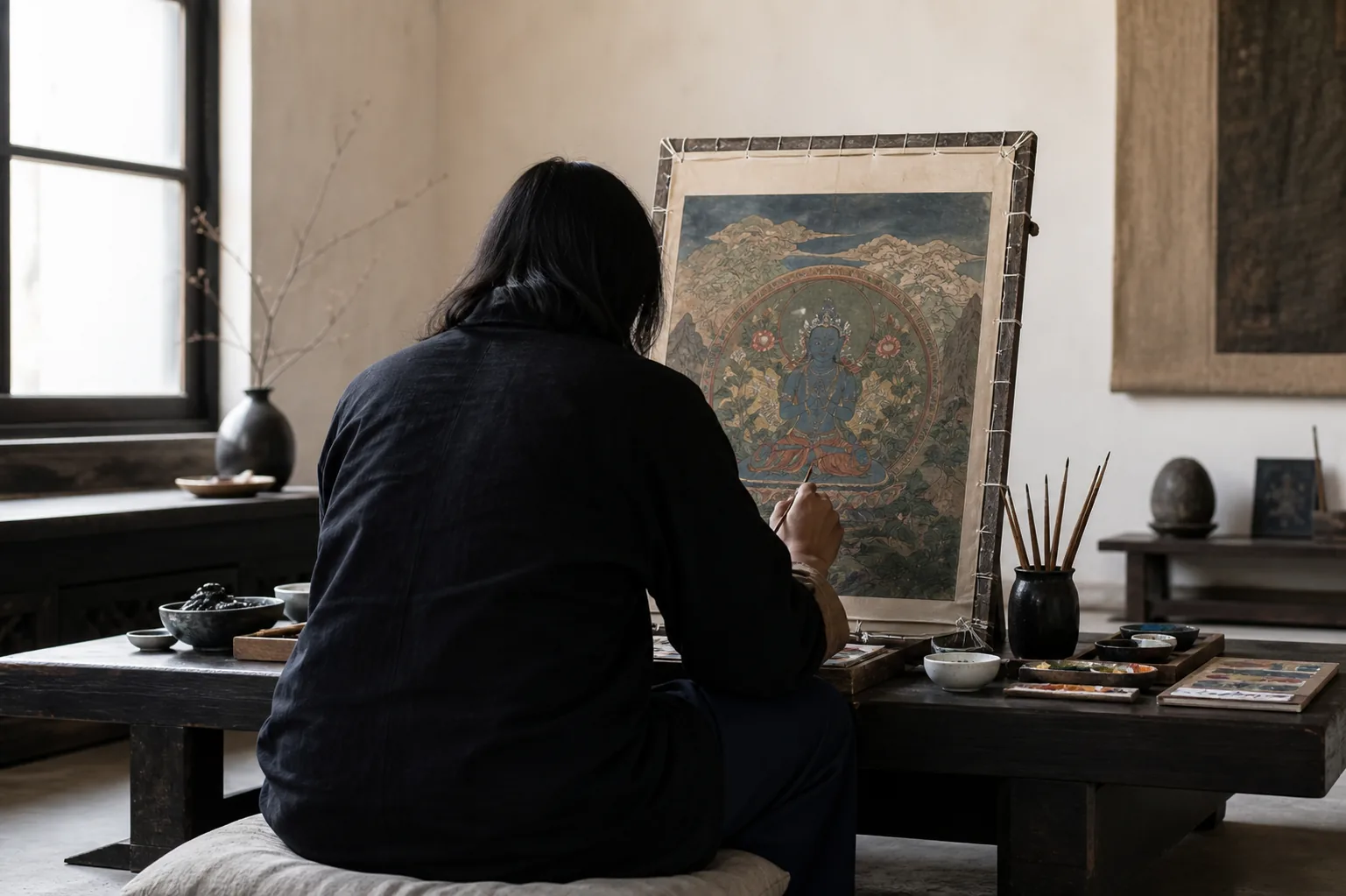
In family narratives, identifiable thangka-making practices emerged from this period. The experience of composition, drafting, line drawing, mineral coloring, gold painting and mounting are passed down from one generation to the next in work and life.
Public sales
Craftsmanship begins to enter a wider collection space
1878 is regarded as the beginning of continuous commissions and public sales. Each delivery marks more than a work leaving the studio: its dimensions, subject, materials, and commission history must also be recorded.
MATERIAL MEMORY
Objects and gestures preserve the context of a practice
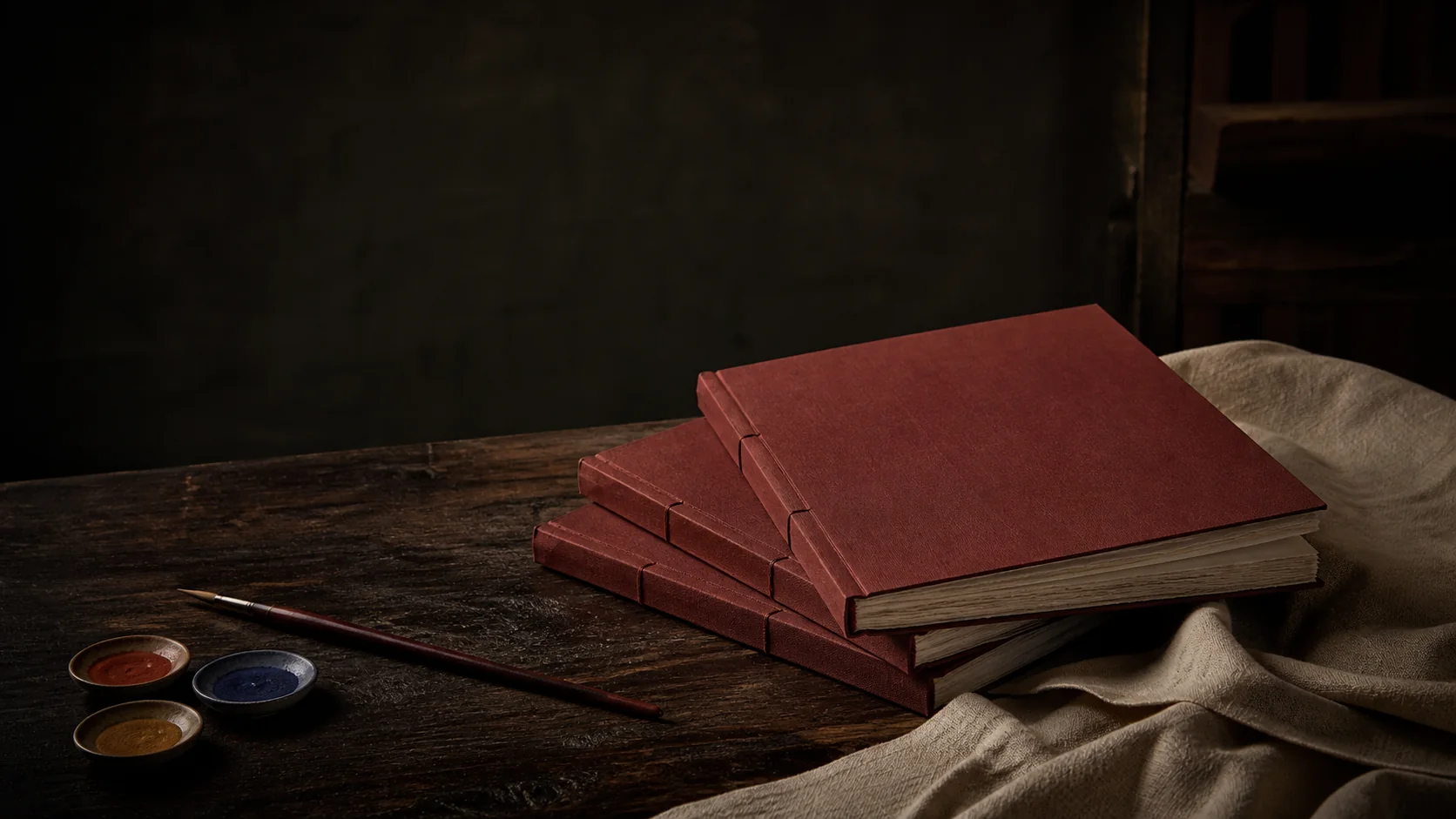
Pattern books, pigments, brushes, and recording tools do not invent a legend for the work. They let us see how repeated calibration and patient waiting gradually bring a work into being.
Brand atmosphere film
A silent demonstration film made from original images created for this site. It conveys materials and studio atmosphere and is not archival footage.
01 · PATTERN BOOKS
How pattern books are passed on
The pattern books, line studies, and colour knowledge left by different generations are not identical. They are working memories, repeatedly opened, compared, and revised: one generation leaves a sense of scale and order, and the next learns why through the act of painting.
Zangjing Art preserves these differences so tradition appears as a path of continuing study, not a fixed set of decorative symbols available for casual replication.
02 · COLOUR AND TIME
Colour has its own measure of time
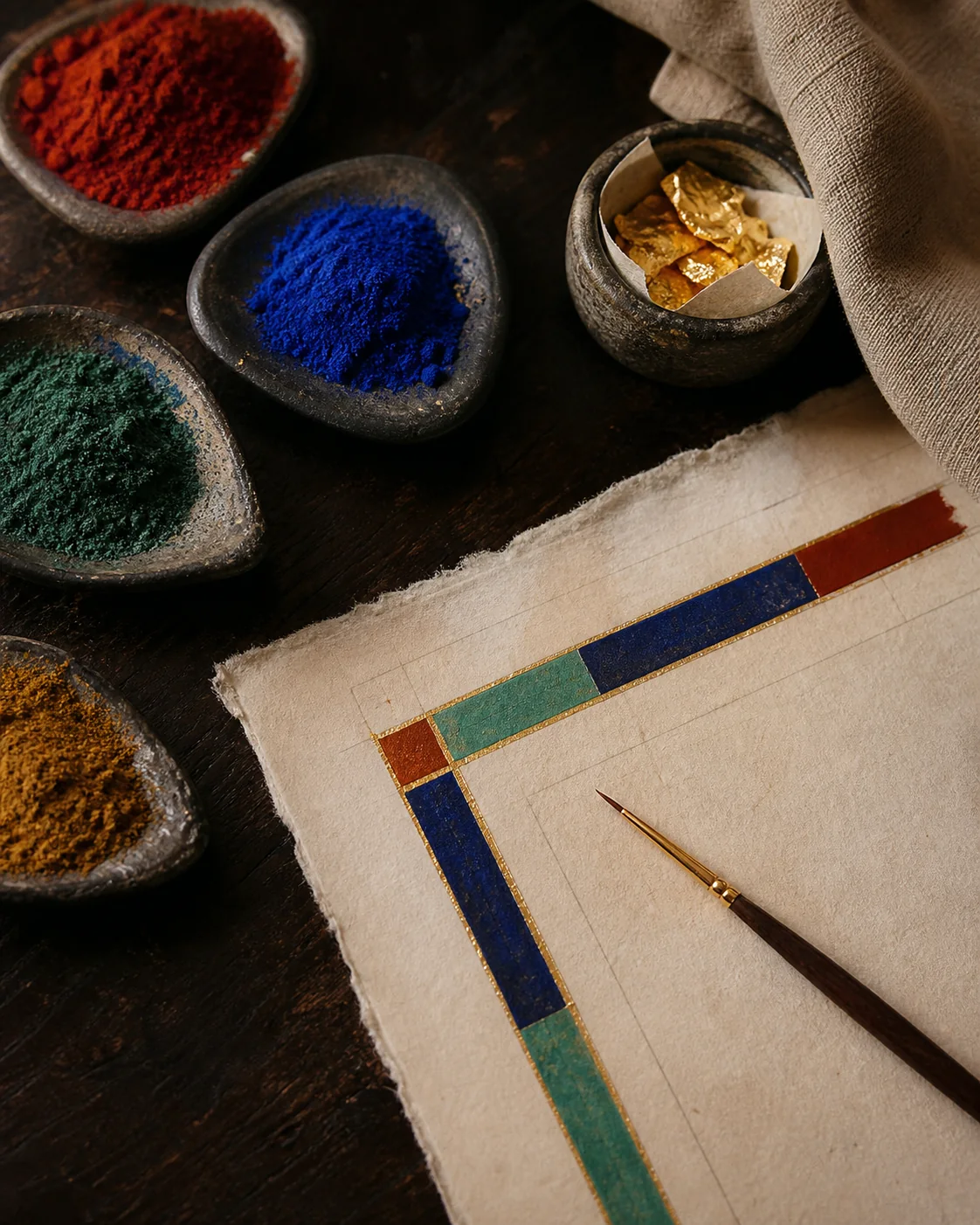
Mineral colour is not completed in a single coat. Grinding, blending, thin applications, and drying are interdependent; gold detail also requires a stable line and surface.
We record materials and processes instead of replacing information with unverifiable claims such as “one hundred percent.” Looking closely is one way to understand how time enters a work.
03 · HAND AND EYE
Tradition and the contemporary do not replace one another
Contemporary creation does not mean abandoning visual order. We consider how artists understand scale, colour, viewing distance, and modern space, while clearly stating what may be adapted and what should not be altered casually.
Each generation may leave its own way of seeing and making, but that change must rest on respect for subject context, painting methods, and the viewer.
04 · LEAVING THE STUDIO
How a work leaves the studio
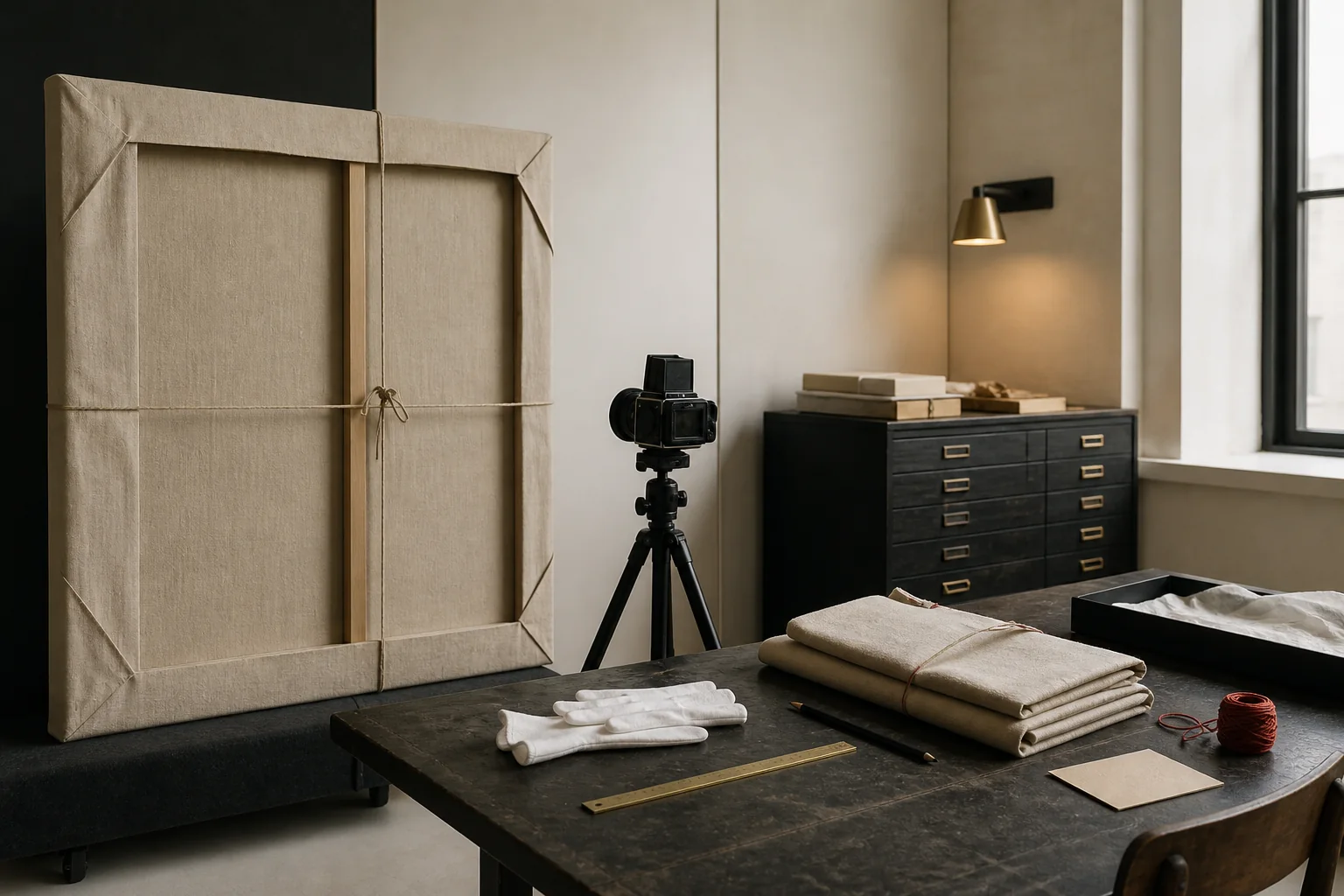
Once a work is complete, its record becomes specific. Image and mounted dimensions, principal materials, subject notes, making images, reference number, packing method, and commission relationship are brought together in one delivery record.
These records are not promises of value. They help a collector understand what they are viewing, how the work is cared for, and which information should guide future conversations.
05 · BLESSING AND BOUNDARIES
On blessing, and on boundaries
In the brand narrative, blessing points to goodwill, attention, and respect: the maker completes the work with care, and the commissioner understands its subject and treats it appropriately.
The site does not present this understanding as a verifiable religious effect, a change of fortune, or a promise of appreciation in value. Respect means explaining what is known and honestly preserving what still requires research.
06 · A LIVING ARCHIVE
Let the record follow the work, and the tradition move forward
Today, Zangjing Art connects ancestral craft experience, pattern books from several generations, and contemporary ways of seeing. Reference numbers, certificate fields, material notes, making images, packing, and movement records form a collection archive that continues to grow.
What needs to endure is not one fixed appearance, but responsibility toward time, materials, visual context, and the collector.